Supporting Documents
- UF Promotion Packet – Quinn McCoy Hansen
- UF Tenure and Promotion Guidelines
- UF College of Liberal Arts and Sciences Tenure and Promotion Guidelines
- UF Department of Spanish and Portuguese Studies
Teaching
Central to my teaching philosophy is the belief that language learning cannot be grammar drills or vocabulary memorization; rather it must be a dynamic journey seeking authentic communication and cultural understanding. Following the communicative approach, I prioritize active engagement, meaningful interactions, and experiential learning, while enabling collaborative environments where language acquisition is possible within a classroom. Thanks to modern technology, authentic materials, real-world tasks, and immersive experiences, curious students can navigate linguistic challenges with confidence, while developing cross-cultural competence and global awareness.
In alignment with UF’s mission of educational excellence and societal impact, the primary goals of my teaching program are to cultivate linguistic proficiency, cultural competence, and global citizenship among students. By nurturing communicative competence, fostering intercultural understanding, and promoting inclusive excellence, I seek to empower the next generation of leaders, scholars, and global citizens poised to navigate an increasingly interconnected world with empathy, fluency, and cultural dexterity. Through active learning experiences, collaborative engagement, and innovative pedagogy, I endeavor to help equip our students on their path through a diverse and dynamic global landscape.
Course Development
Due to my educational philosophy, I view my most important accomplishment as the creation of a group of online textbooks tailored to the needs of our Portuguese language learners. I sought to replace traditional textbook limitations by utilizing technology to create a three-semester textbook free and available to our students via Canvas. This innovative textbook integrates multimedia resources, interactive exercises, and real-life scenarios, facilitating a more immersive learning environment than those of other Portuguese language textbooks currently available.
The new digital text I created made it possible to develop the first asynchronous online Portuguese courses here at UF. I developed, with a grant from the Center for European Studies, a two-course year-long sequence of Portuguese for both traditional brick-and-mortar students as well as the growing and important UFOnline program. The creation of the online Portuguese courses has also aided in increasing the enrollment of beginning Portuguese languages by 100%.
My most noticeable accomplishment across the college has been the creation of a Quest 1 course, PRT 1515 Soccer Explains the World. This course quickly became one of the most popular Quest courses at UF for its approach to sports and society. The success of the course didn’t go unnoticed, and my syllabus has served as a model for many other syllabi. Additionally, my course was featured in the LearningWell magazine, a magazine focused on higher education, for its innovative approach to engaging big topics with first-year university students.
PRT 1515 Soccer Explains the World
Beginning in the Fall of 2020 I began creating a Quest 1 course for the UF Quest Program. This course has turned into a highly popular course for its innovative approach to discussing society and asking critical questions about justice and power. Example syllabus is found here.

The course syllabus has served as an example for other Quest courses for its clarity and completeness.
The course discusses race in sports and society starting from the view of race in Brazil.
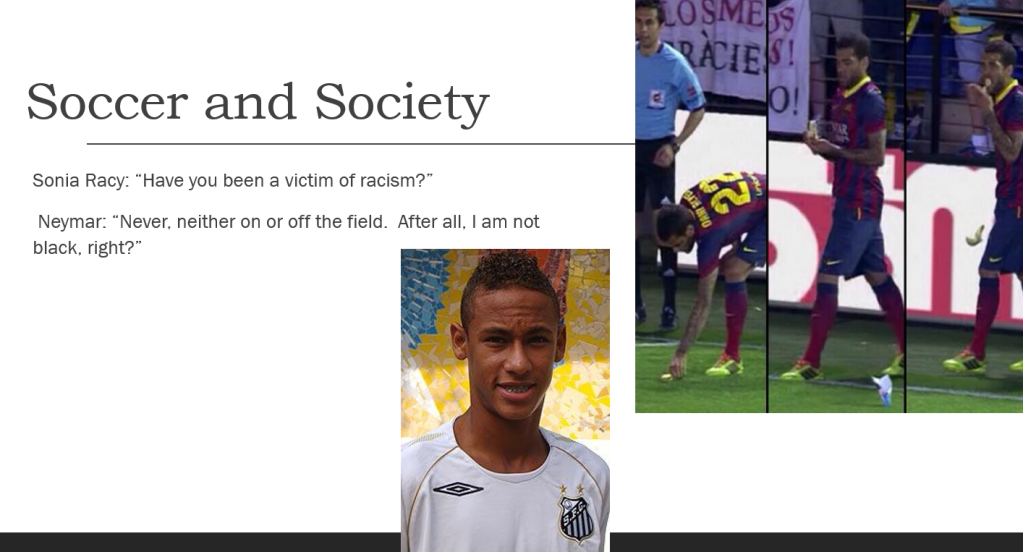
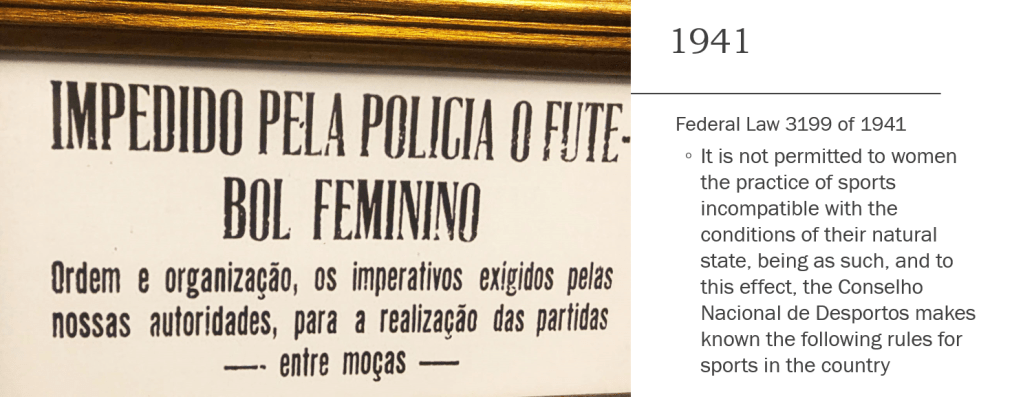
The course continues by discussing the late inclusion of women in soccer in Brazil and the world.
A major element is the focus of power and justice. The interference of political movements often have negative effects on soccer in Brazil in the long run, although there is sometimes short-term gains.
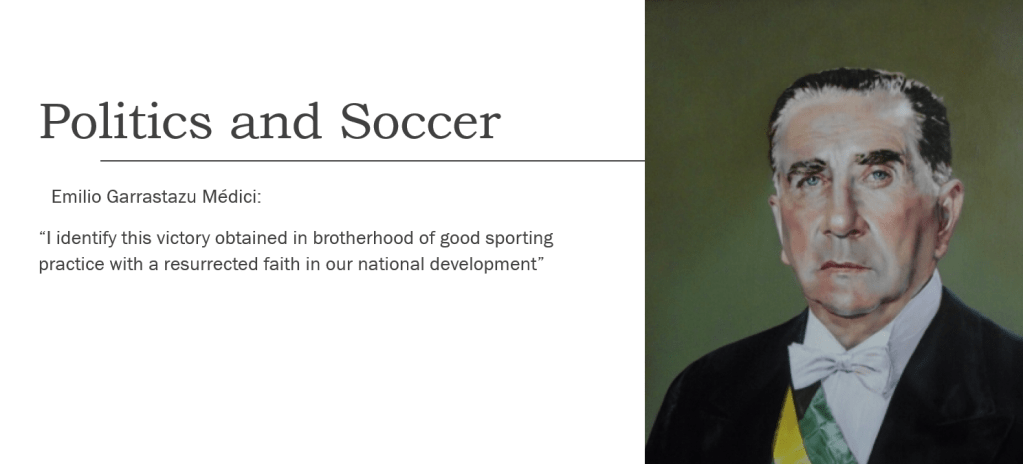

One overall goal of Quest is to provide students with experiences that educate and connect the classroom and textbook to the real world. Here is an example of an interview related to the experience of female soccer players.
Examples of Instructional Materials and Course Development for Portuguese
Development of Online Textbook – Examples for Lower Division Courses
The textbook is made up of a series of Canvas pages that are divided into lesson pages and assessment pages. In total there are over 400 pages divided evenly into lesson pages and assessment pages. Lesson pages include vocabulary, grammar, and cultural information. Assessments are varied in their format from free-response to multiple choice to individual audio/video recordings. For the three semesters of course work, POR 1130, 1131 (3010), 3242, there are nineteen modules. See the links for sample syllabi. Additionally follow these links for other Portuguese courses I have taught: POR 3451, 3500, 3701, 4420
The text and work are designed with the idea of the flipped classroom. Students are assigned the sections of the course to do at home and then come to class to practice by speaking as much as possible in class without concentrating on learning grammar during class time.
Below are examples of they different types of pages found in the online textbook: 1) Pronunciation; 2) Vocabulary and Cultural Material; 3) Explicit Grammar Material; 4) Assessments, Quizzes, and Tests; 5) VoiceThread Activities.
For a document that examples of whole pages of lessons see here. Note that these examples do not include the audio/visual materials as those are embedded directly into the Canvas pages.
1 – Pronunciation Pages
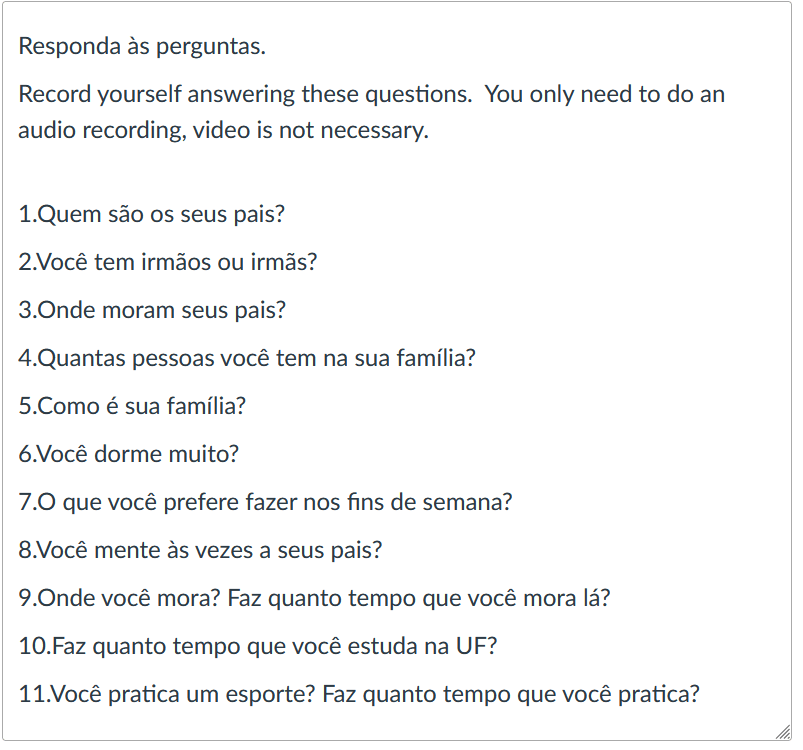
Listening and pronunciation exercise. Students listen to the recording, and then record themselves pronouncing the words, concentrating on the specific sound or sound combinations.
Students also practice out of class pronunciation with questions relevant to the lesson and module
2 – Vocabulary and Cultural Pages
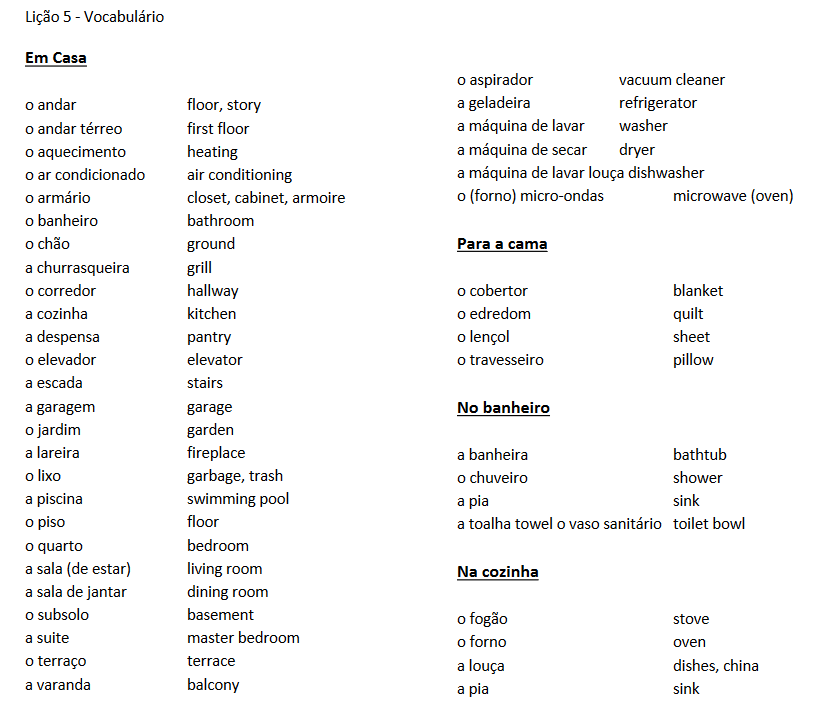
Students feel comfortable when they have explicit lists of vocabulary. Each module has between 50 and 200 words. This gives the students a sense of anchoring to the topic. However, students are encouraged to find vocabulary that fits their lives and the topics they regularly engage in.
Beyond lists, much of the vocabulary is related to life in Brazil and the Lusophone world.
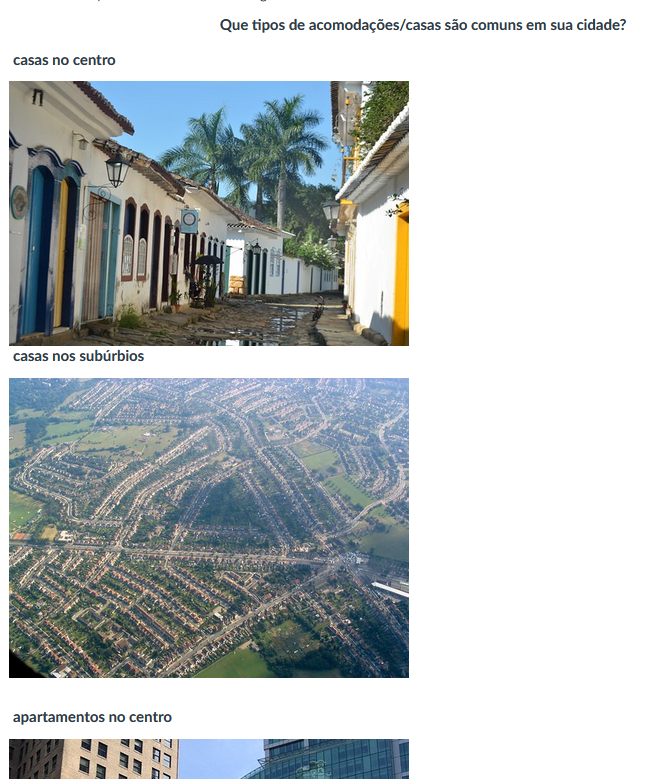
The vocabulary and culture section has authentic use of the language with cultural references.
3 – Explicit Grammar Material
Grammar material is presented in an array of manners from explicit explanations such as here.

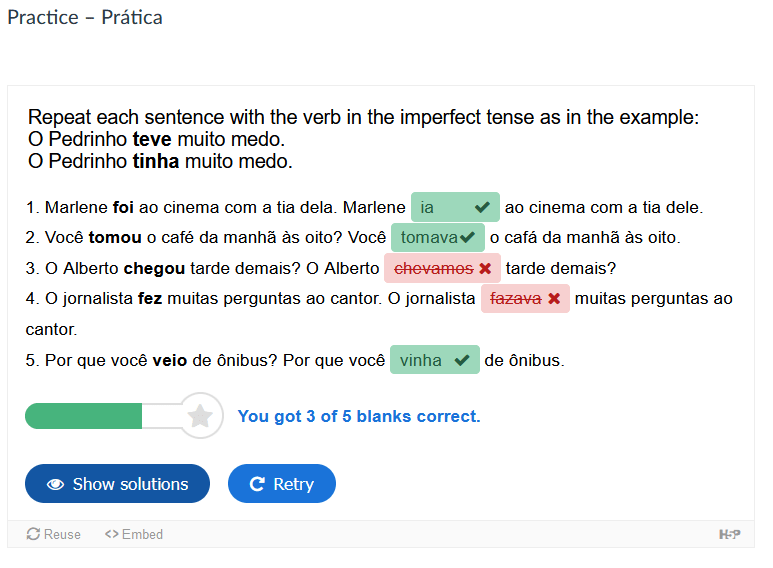
There are ungraded practice exercises embedded in the grammar lesson.
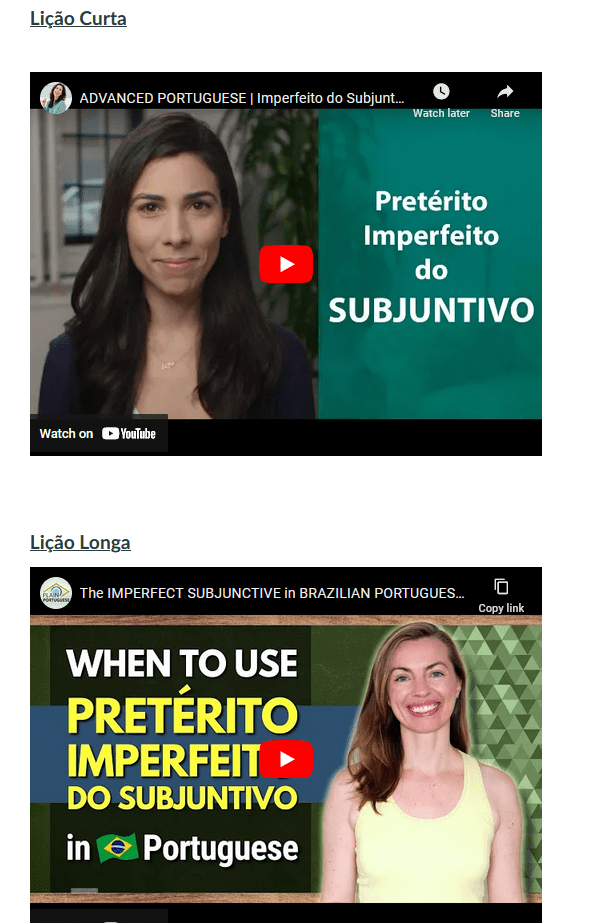
To accompany the text and lessons that I have written, I also curated hundreds of hours of freely available grammar explanations on the internet to provide several different styles for the students to find what works best for them.
4 – Assessments and Activities
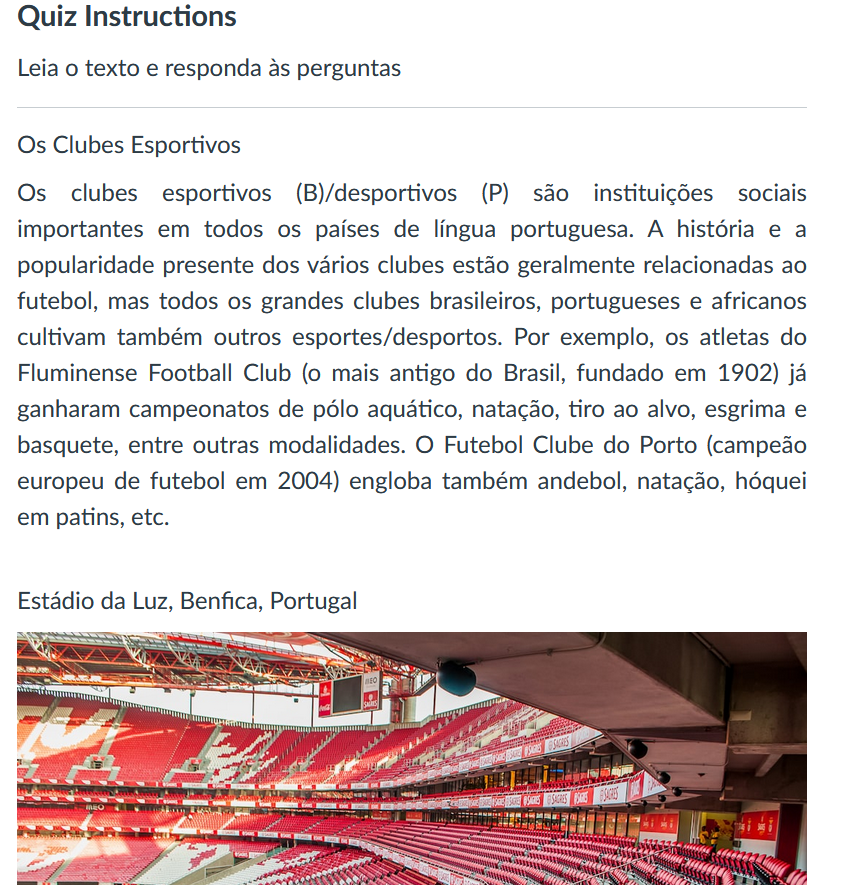
Each lesson has several assessment that deal with reading comprehension as well as cultural understanding.
The readings end with comprehension questions which can be open-ended, multiple choice, true/false, matching, or essay answer. This assessment is matching clubs and colors for an early module in the beginning level..

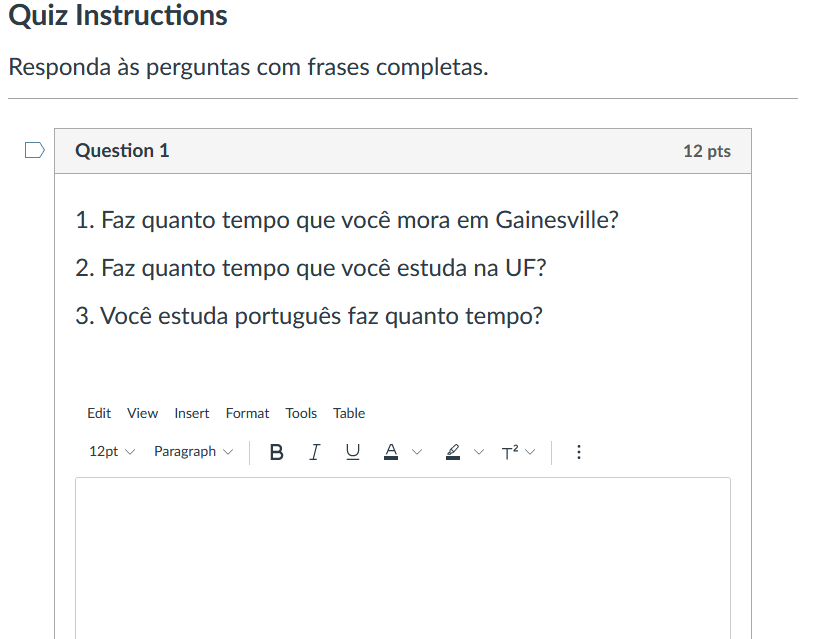
Some of the grammar assessments are open ended questions that require understanding and use of the grammar concept covered in the lesson and module. This example deals with using the construction Faz + the amount of time to describe length of time doing an activity.
Because of the importance of verb and verb conjugations in Portuguese, this exercise like others, deals merely with having the correct conjugation and that the verb agrees with the subject in person number, as well as clausal mood.
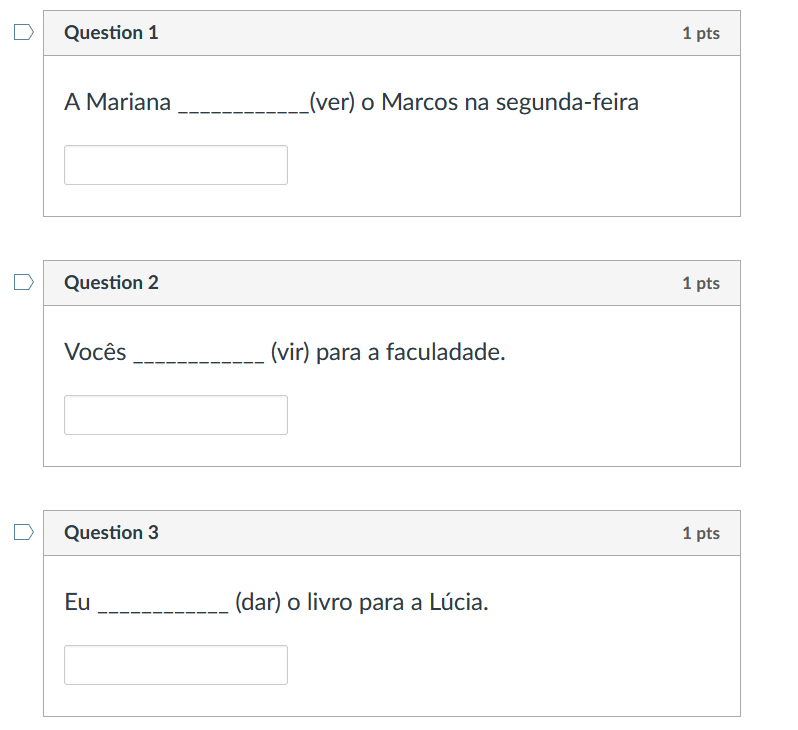
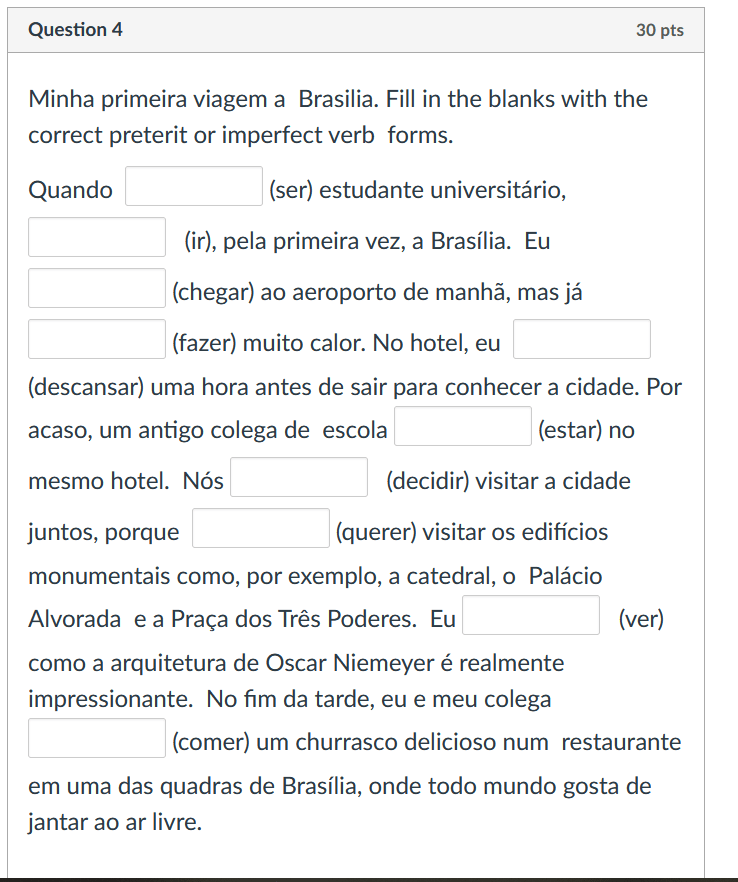
A key to the textbook is to tie the cultural learning to the grammatical ideas. The example here works on the difference between the preterite perfect and preterite imperfect while discussing the city of Brasilia in the lesson where the main theme is traveling and visiting new places.
5 – VoiceThread Activities
VoiceThread is used in the beginning courses, especially online, as a way to have collaborative interaction on a more flexible schedule. This allows the students to receive grammar, cultural, or vocabulary information as well as practice and be assessed, much like a classroom situation.
Teaching Evaluations
Student Evaluations
Employment Duties
My role as a Lecturer of Portuguese is divided into three main categories: teaching, organizing, and assisting with Portuguese across the college and university. While my role has several components, the bulk of my effort is dedicated to teaching, with emphasis on beginning and intermediate levels of Portuguese language instruction. Here, my primary objective is to prepare both undergraduate and graduate students for higher levels of discovery of Brazil and the Lusophone world.
Teaching
Teaching three courses each semester always includes at least one lower level, or introductory Portuguese course. As with most instructors, this involves creating new syllabi or updating old syllabi and courses to meet new standards and needs. Another important course is the intermediate level course, POR 3242, that I redeveloped in 2021. This course serves as an introductory course for our increasing number of heritage speakers as well as second and third semester Portuguese learners.

Organizing
My second role of organizing is broken into three parts. First, I prepare all the Lower Division Portuguese courses, these include POR 1130, 1131, 3010, 3242. For this, I created and continue to maintain three completely self-contained textbooks and assignments on Canvas. This requires constant update of the text, videos, and assessment material. This also entails working with the other Portuguese faculty members to prepare the lower division courses they will teach. Additionally, from time to time, my role as Lower Division Coordinator also involves identifying, training, and mentoring a Teaching Assistant. Second, as the Portuguese Undergraduate Coordinator, I personally work with each of our major and minor students to create a study plan. Third, I serve as the faculty advisor to the Brazilian Portuguese Club, a club dedicated to practicing Portuguese with friends, classmates, and member of the UF community. In this role, I help organize and monitor the students for any help that they need.
Increase in minors and overall students in Portuguese
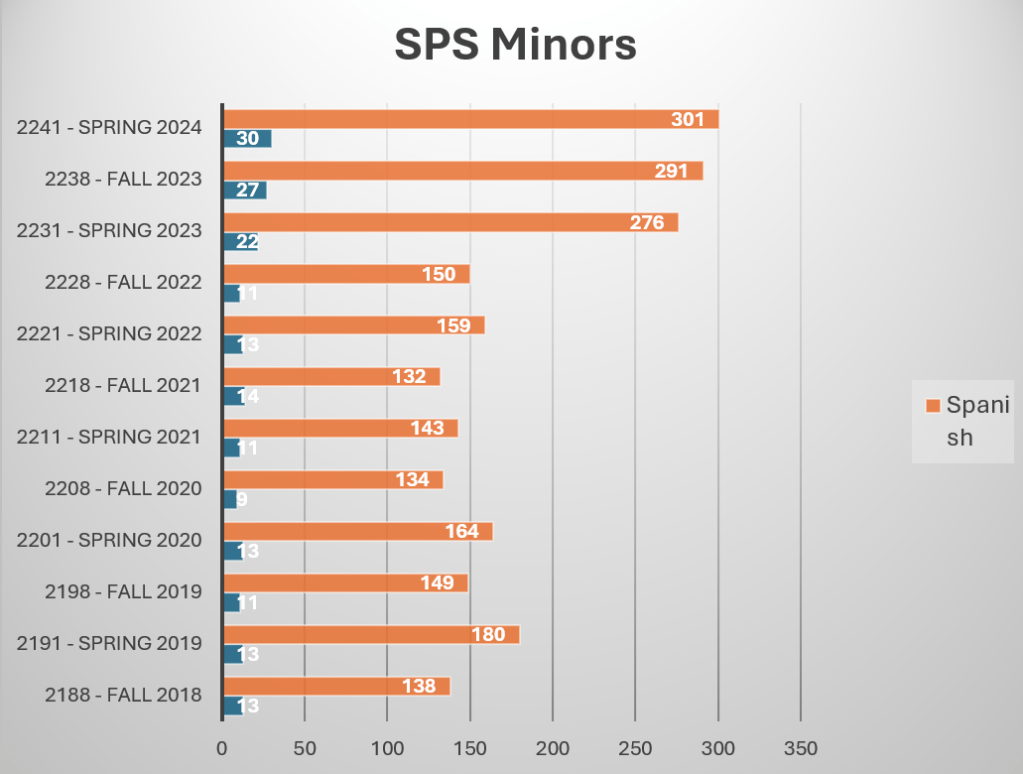
The total number of students studying for the Portuguese minor has greatly increased due to my efforts in creating modern beginning courses and better publicizing the minor. The graph below shows an average of 12 minors during the Fall 2018 to the Fall 2022 period increasing to an average of 26.3 minors since the Spring of 2023.
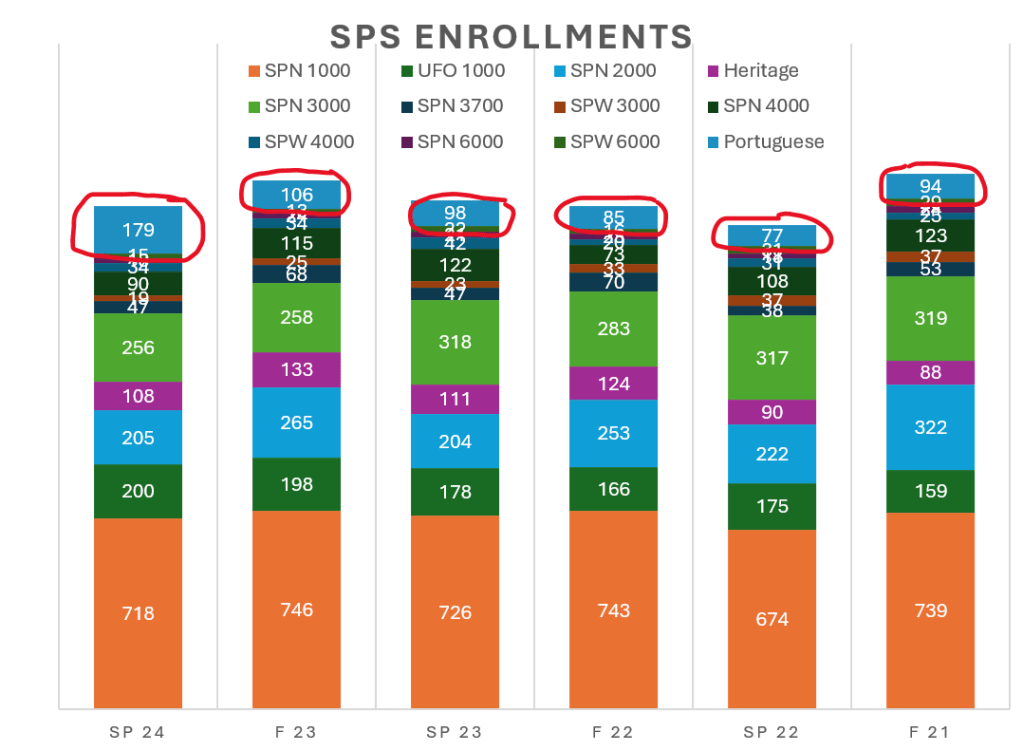
The total enrollment in Portuguese courses as increased by nearly 100% due to the new courses that I created, POR 1130/1131 online version and PRT 1515. The average enrollment was 88.5 from Fall 2021 to Spring 2023, and now the total average has been 142.5 since the Fall of 2023.
Assisting
My third role is to serve as the Portuguese language evaluator for both the Spanish and Portuguese Studies Department, but also for the Center for Latin American Studies. For the Center, I provide language evaluations principally for FLAS recipients that must be assessed twice during an academic year. This role leads to helping across the college and university as many professors and students look to me for language evaluations, translations, and reverse-translations for studies, grants, and fellowships they are working on.
Service to UF
Throughout my tenure at the University of Florida, I’ve been engaged in service roles within the Spanish and Portuguese department, the College of Liberal Arts and Sciences (CLAS), and the University at large. My commitment revolves around fostering complete inclusivity and academic excellence, all aimed at helping student growth and success.
University Level
- Scholarship Review Committee of UFIC Study Abroad from August 2022-Present
- FLAS Scholarship Review Committee for the Center for Latin American Studies from August 2022-Present.
- Portuguese Language Evaluator for FLAS Scholarship recipients for the Center of Latin American Studies from August 2019-Present
- Faculty advisor – Brazilian Portuguese Club from August 2019-Present
- Faculty advisor – UF Soccer Fans Club From August 2023-Present
College Level
- Search Committee Member, Assistant-in Advising in CLAS Academic Advising 2024
- Quest Curriculum Committee August 2019-May 2021
Department Level
- Lower Division Coordinator – Portuguese 2019-Present
- Non-Tenure Track Peer Observation Committee 2019-2021
- Portuguese Undergraduate Coordinator 2022-Present
- Search Committee Member, Lecturer in Portuguese, Academic Year 2022-2023
- Search Committee Member, Assistant Professor of Spanish For the Professions, Academic Year 2022-2023
- Director for UF in Rio Summer 2023
International Activities and Study Abroad
I have a deep commitment to study abroad programs having been the beneficiary of such an important experience during both my high school and university education. I have also had the privilege to be the director of the UF in Rio program which continued to solidify support for study abroad.
For the past two years, I have helped with the restructuring of our study abroad program, UF in Rio. Our program is one of the oldest continuous programs offered at UF dating to 1980. Together with the other Portuguese professors, I was able to help create a situation that will improve the bureaucratic necessities of the program while still maintaining a high-level program. Through strategic partnerships with local institutions and partners, our program will be a viable option for study in Brazil for many years to come.
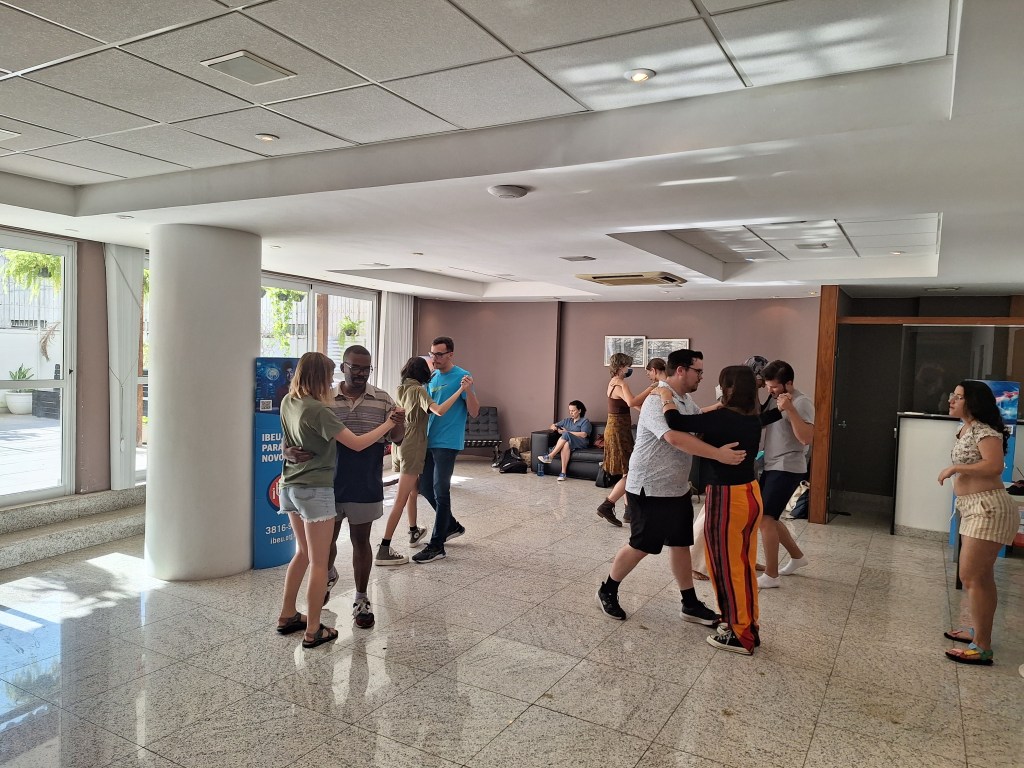
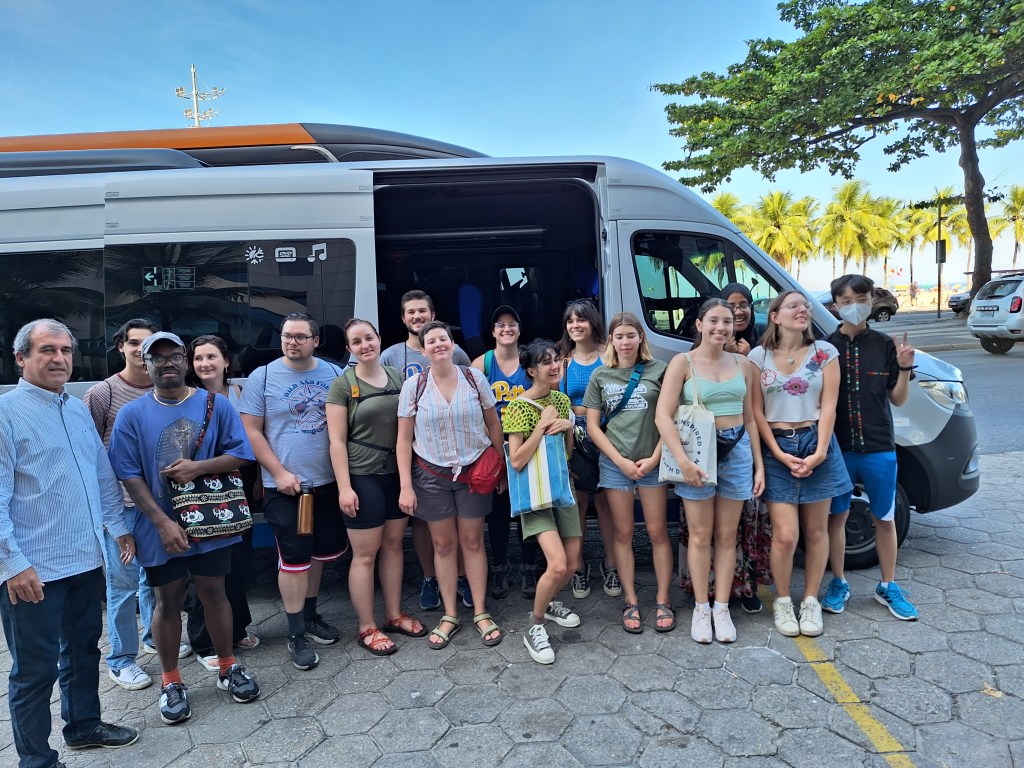
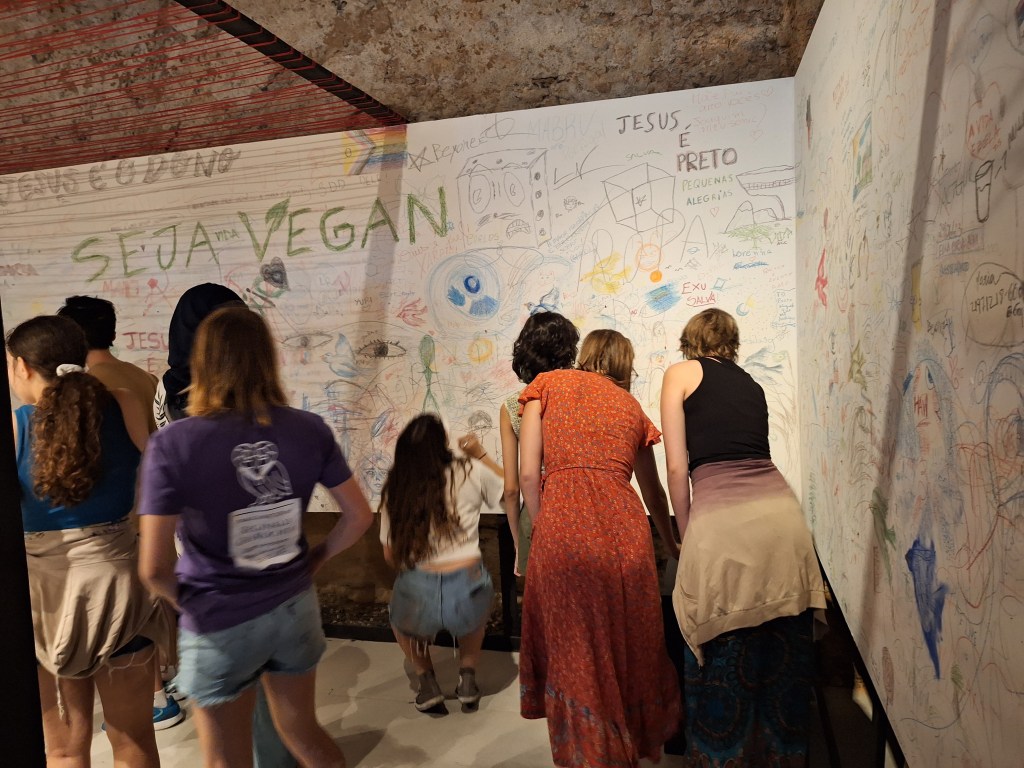
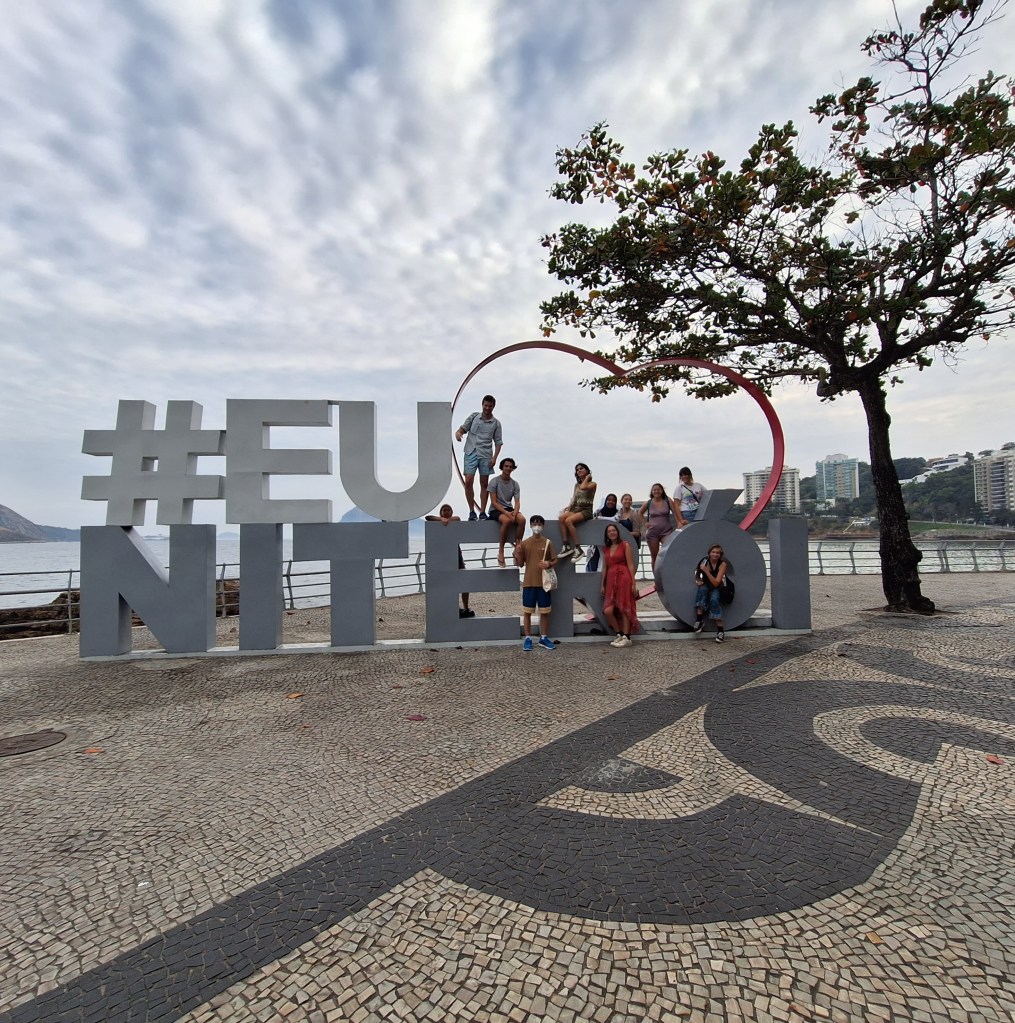
UF in Rio is a program that serves not only UF students but students from across the country. The student’s involvement is generally funded by the national government to aid in preparing citizens for active engagement with Brazil in their future careers. Because of this, as the director of UF in Rio 2023 and the Co-Director in 2024, I have the opportunity to help students grow within the Lusophone world and position them to use Portuguese at the highest level in the future careers.
I hope to continue aiding the UF in Rio program by extending its reach to even more universities and to grow it past its current size. Study abroad programs have the ability to radically improve the educational experience of our students. This in turn, properly prepares them for a future as productive global citizens.
 Quinn McCoy Hansen